PeePen
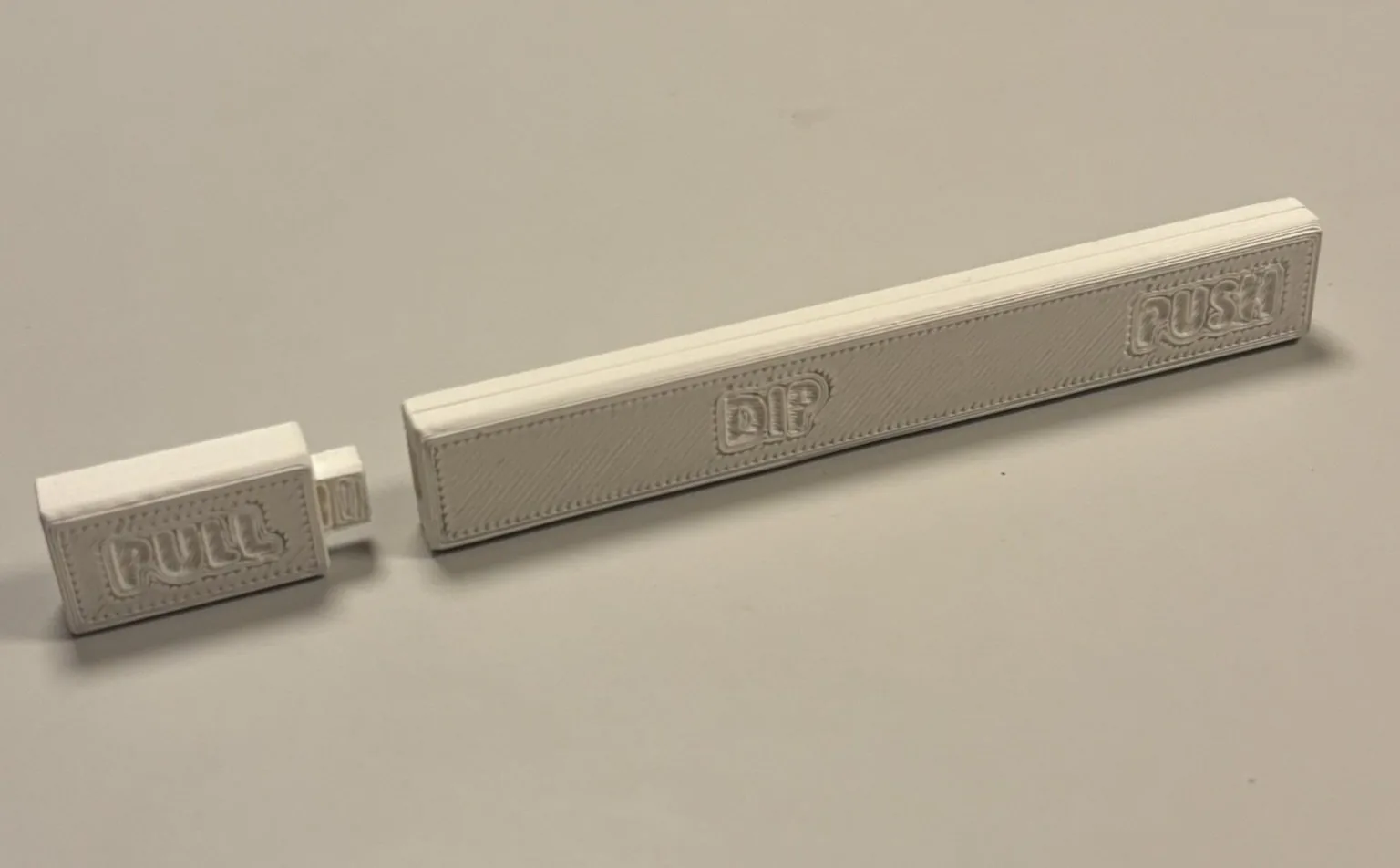
A urine test with three instructions, printed on the test itself. Pull. Dip. Push. Designed, built and packed in four days for UVIGGA Diagnostics.
- Client
- UVIGGA Diagnostics · health tech
- Context
- SDU · Integrated Design 3 · Oct 2025
- Time
- 4 days · pitch on day 5
- Role
- Solo · concept, CAD, prototype, packaging
- After
- Follow-up meetings with UVIGGA · 2026
Get the right amount of urine onto a test strip. Every time, whoever holds it.
UVIGGA has developed a test strip that diagnoses urinary tract infections in minutes. It needs between 100 and 200 µL of urine. Too little and the test doesn’t run. Too much and it floods.
They asked us to rethink the COVID-style test: a cassette, a pipette and a leaflet. Theirs had to work for a nurse on a busy ward and for someone at home, with almost no training. Hygienic, cheap and simple to mass-produce. We had four days, then a working prototype and a pitch.
How do you collect it, how do you deliver it, and how do you make it obvious?
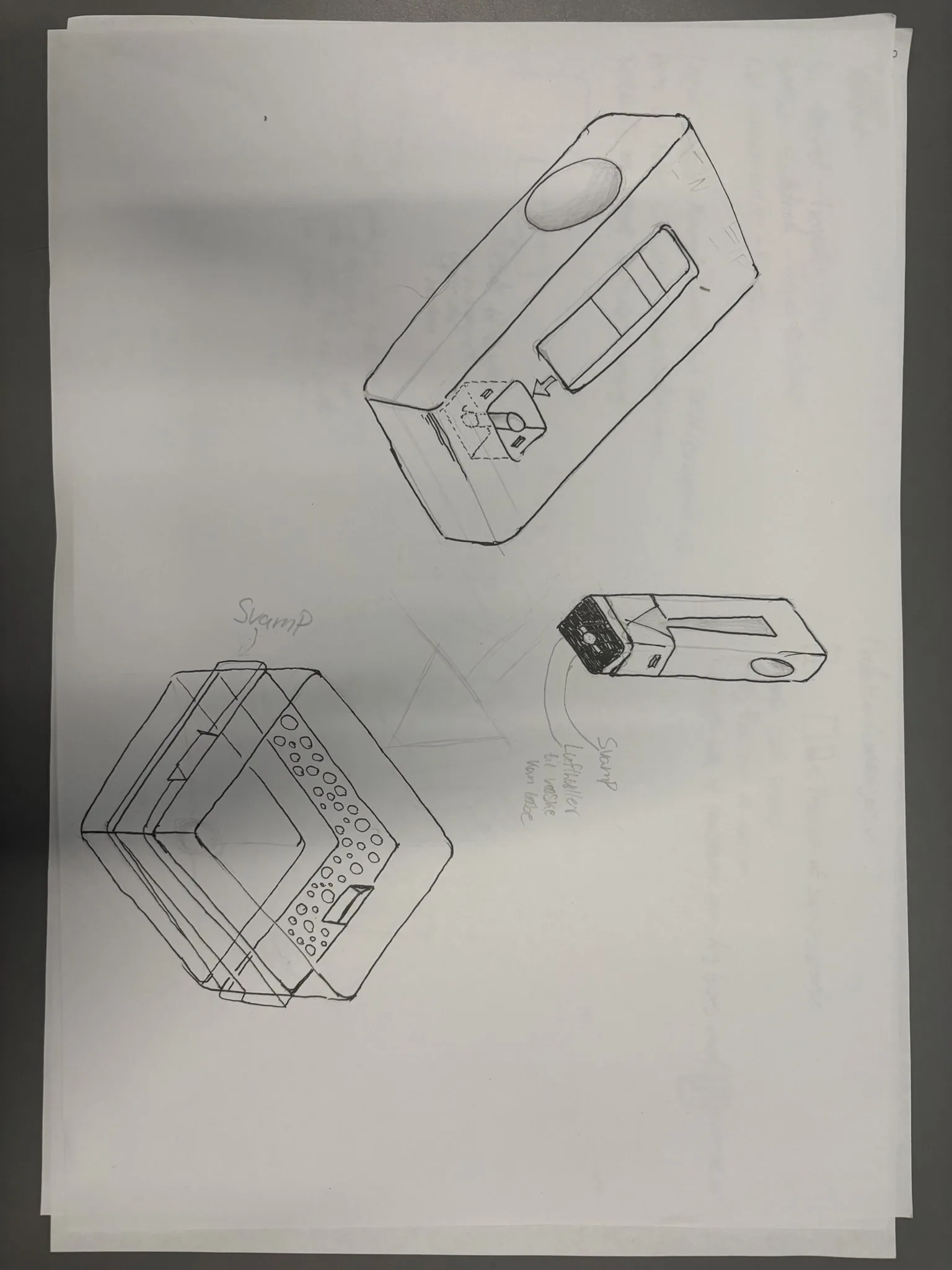
I split day one into those three questions and sketched answers to each. A pipette, where your fingers decide the dose. A small cup, which you pour and spill. And a sponge, which soaks up a set amount on its own.
The pipette and the cup asked the user to measure. The sponge didn’t. In the corner of the sheet I wrote the rule the rest of the week followed:
Dip it in the liquid. No measuring. The measuring has to happen by itself.
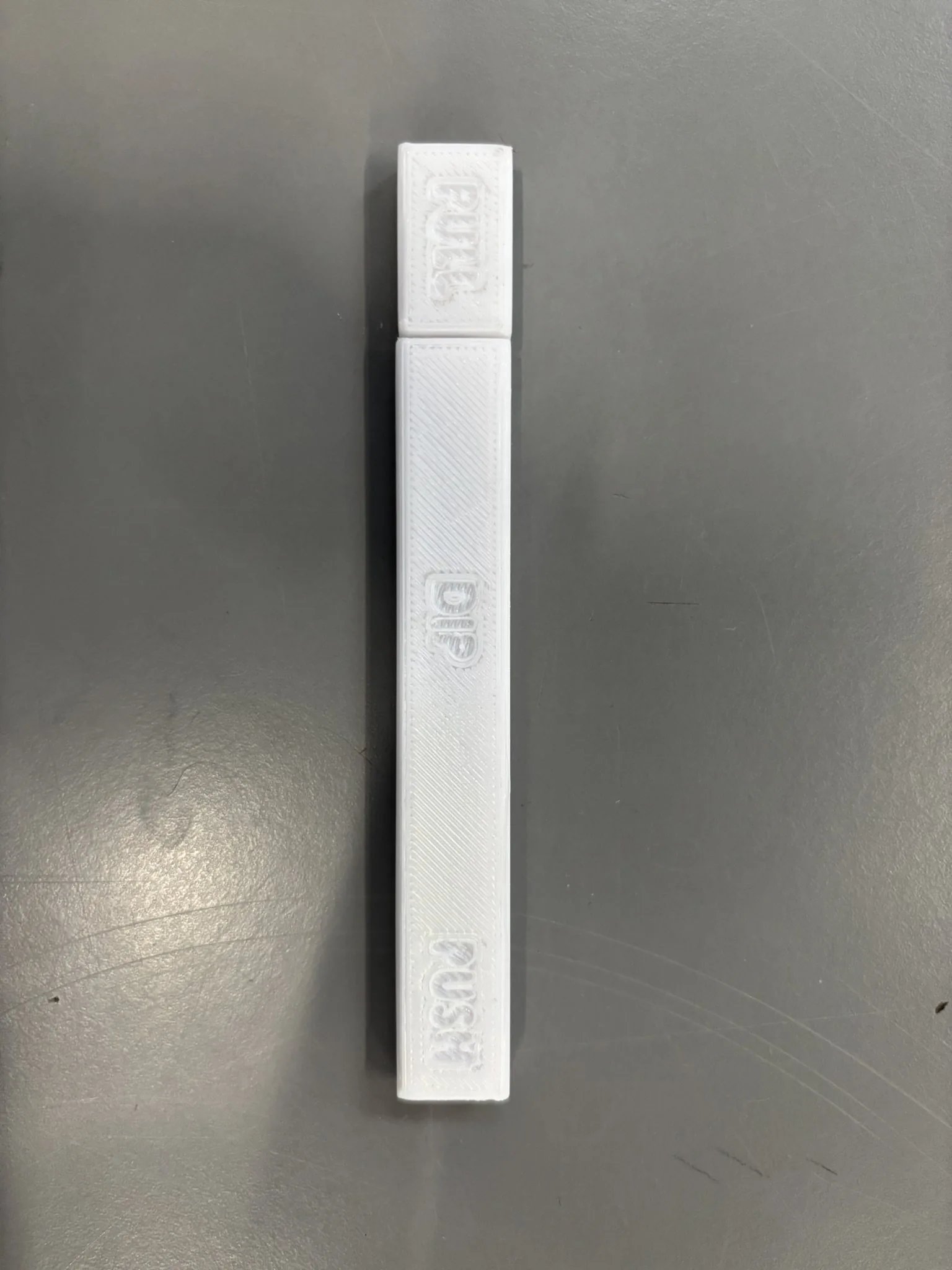
The pen does the measuring. The user does three things.
Pull the short part off the pen. Dip it in the sample. The sponge at its end soaks up what the strip needs, and nothing more. Then push it back into the long part until it locks. Nobody measures anything.
The words sit on the pen in the order you use them, from one end to the other. No leaflet to lose, nothing to read twice.
My first concepts were boxes. The final one is a stick.
A reader with a slot for the strip. A sponge cartridge with air holes so the urine could run in. They worked on paper. But every extra part is one more thing to mould, assemble, keep clean and explain. So I kept cutting until one part was left to hold and one cap to pull.
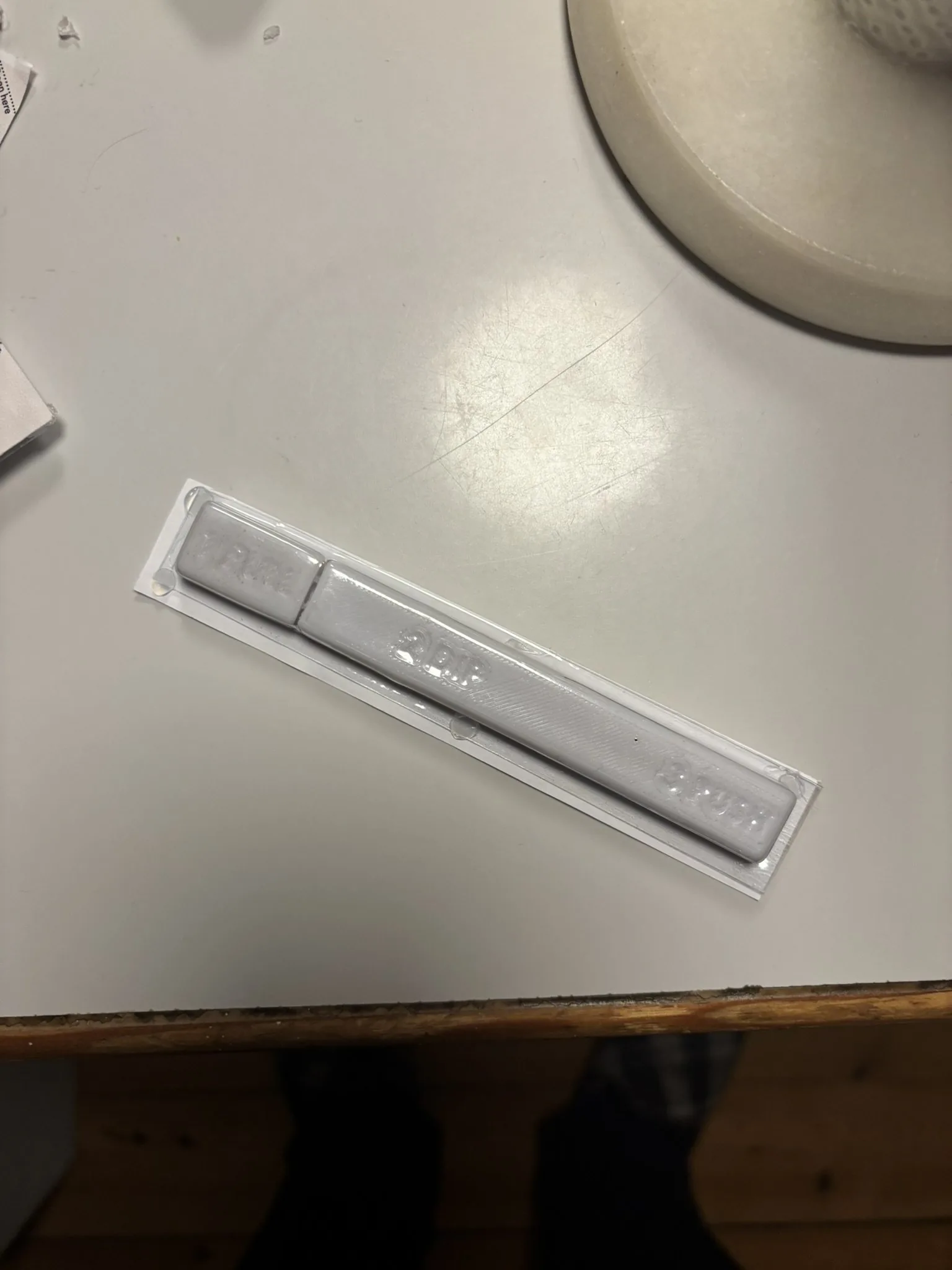
The brief asked for a product. I wanted to hand over something that felt like one.
So I vacuum-formed a blister around the pen and designed the card behind it: 13 × 2 cm, a tear-off corner, and the reading guide on the back. One line is negative. Two lines is positive. No control line, throw it away. The brief also asked for name ideas. PeePen is the one I put on the box.

Filmed at home, one take, the night it was finished.
No studio, no script, in what I was wearing. I kept it because it shows the pen in hands better than any photo, and because it’s honest about the pace. Four days in, this is what it looked like.
The pitch wasn’t the end of it.
UVIGGA got back in touch after the workshop. In 2026 we held several meetings to work out how we could keep working together. For me, that is the clearest sign the PeePen solved a real problem.
Four days is enough, if you decide early what you won’t make.
The rule from day one did most of the work. Once the user wasn’t allowed to measure, half my ideas were gone, and the time went into the one that was left.
- Scope
- One clear rule cuts more than a long list of requirements.
- Instructions
- Put them on the object, in the order of use. Then nobody has to find them.
- Packaging
- It’s part of the product. The reading guide belongs where the result is read.