Pull to
lower.
An emergency lowering for an adjustable bed. Today it takes a hex key and a crawl under the bed. We moved it to the bed’s edge.
- Context
- SDU · ID3 · Autumn 2025
- Client
- LINAK · TWINDRIVE TD4
- Team
- 5 design engineers
- My part
- Mechanism · drawings
- Duration
- Sep–Dec 2025
The power goes out with the bed raised. Now what?
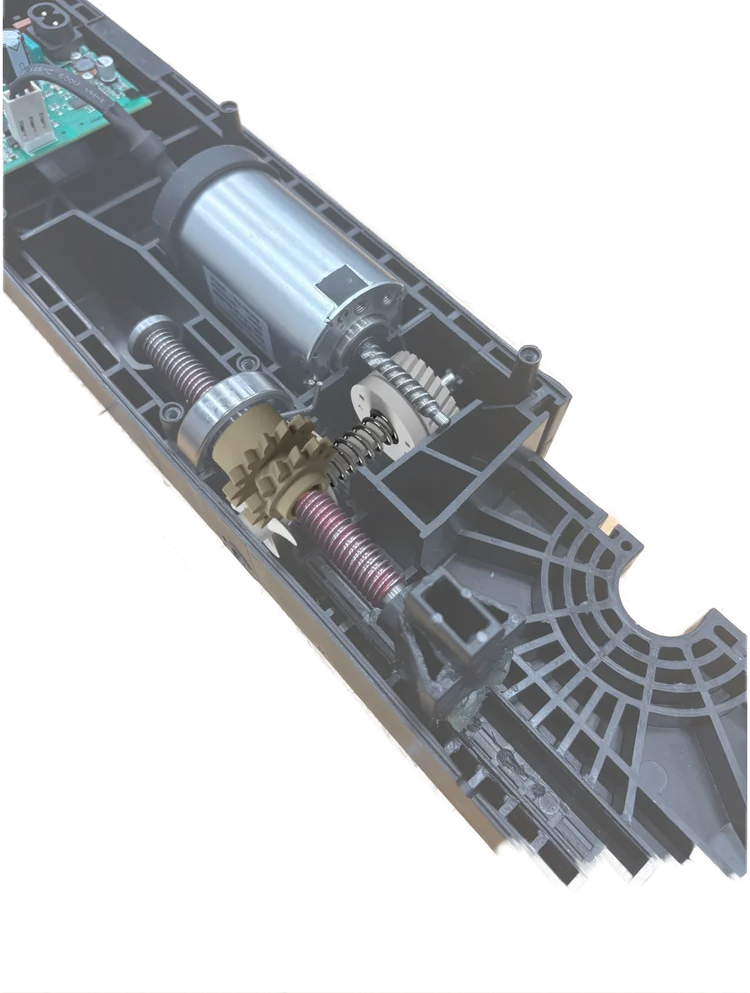
The TWINDRIVE sits under the middle of the bed and lifts the head and foot ends. When the power fails, you lower it by hand, as the video shows: find the hex key, get under the bed, put it in the right hole and turn. Many turns. And the motor fights back the whole way.
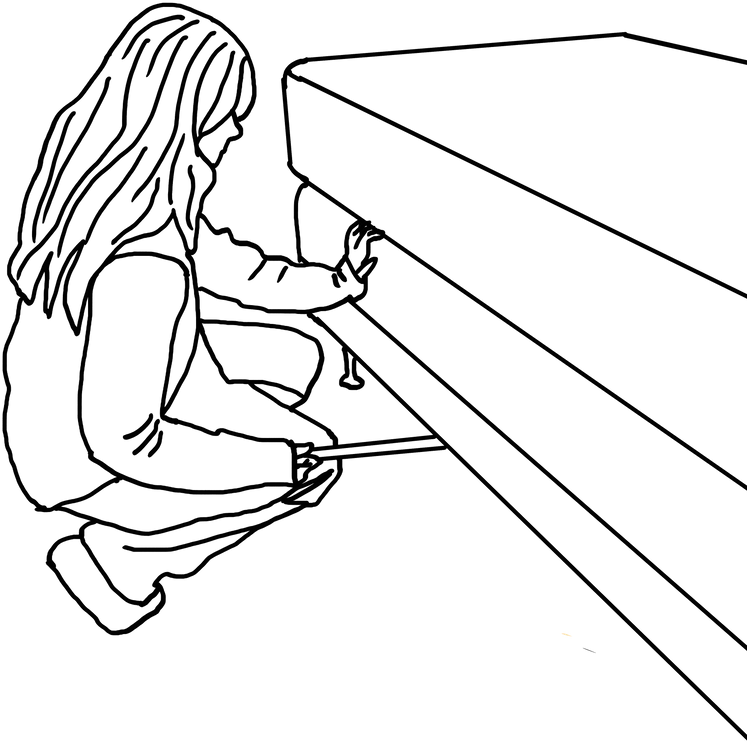
The people who buy these beds are often older or have limited mobility. The ones who most need the bed to come down are the ones least able to crawl under it.
Before changing it, I had to understand it. So I drew it as simply as it would go.
Open the actuator and you see teeth, threads, a circuit board and a lot of plastic. Underneath, it’s four parts handing rotation to each other. I redrew every gear as a plain cylinder with an arrow for its direction, one part highlighted at a time. That gave the group one shared picture to work from, and it showed exactly where we could step in.
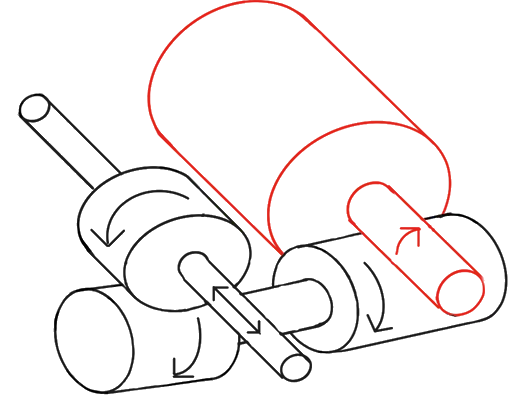
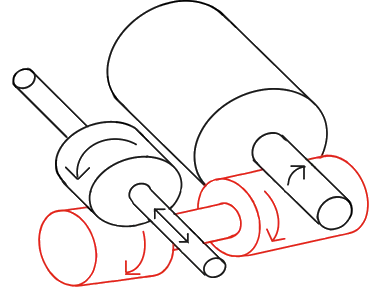
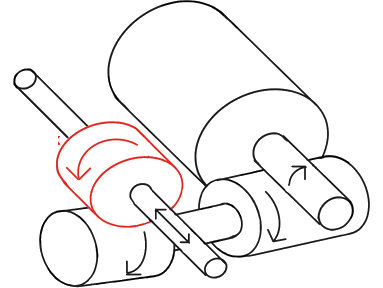
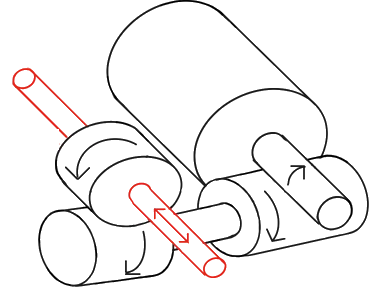
The worm gear that holds the bed up is the same thing that stops you lowering it.
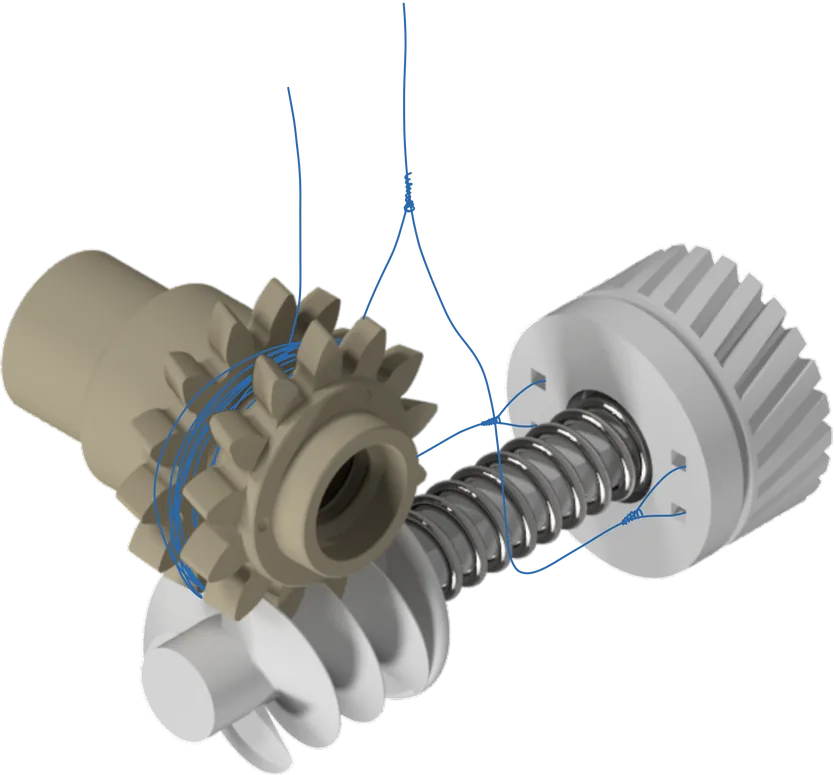
A worm drive locks itself. That’s a feature: the bed stays where you left it, with no power. But when you turn the gears by hand, you drag the motor along with them. Our pull tests made it clear. A pull would only be light enough if the motor came off the gears first.
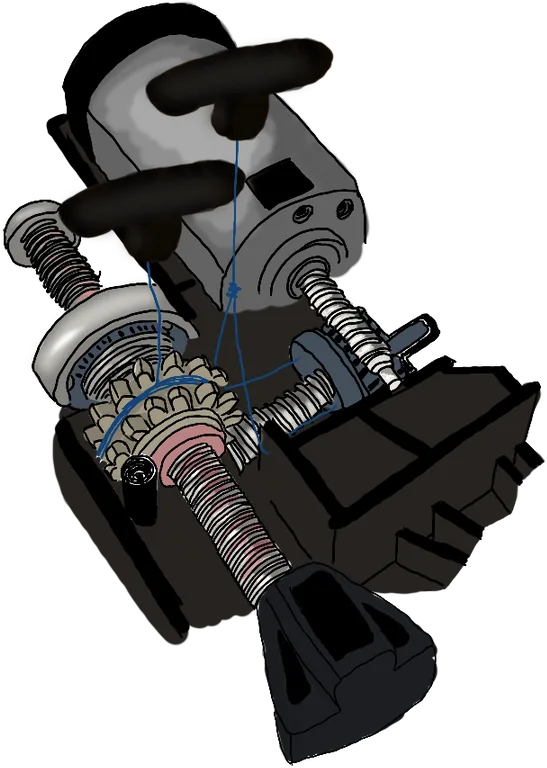
So we split the white worm wheel off its shaft and put a spring under it. In daily use, the spring holds it up in mesh with the motor’s worm. Pull the string and the wheel slides down the shaft, out of mesh. Now nothing is holding the bed. Let go, and the spring pushes it back up. The bed is locked again.
No tools, no crawling. But two handles is one too many.
Our concept hangs the handles under the bed frame, within reach from lying down or crouching beside the bed. Handle 1 frees the motor and clicks into a hook. Handle 2 unwinds a metre of string from the gear nut and lowers the bed. It works. But it asks someone in the dark, maybe stressed, to do two things in the right order, at both ends of the bed. That’s four handles. In an emergency, that isn’t good enough.

That isn’t acceptable. For a company like LINAK, 10% wouldn’t be either.
LINAK makes components in very high volumes. A function people use a few times in a bed’s life can’t add that much to every actuator. We optimised the concept for the user, not for cost, and it shows in the parts list: a worm wheel split in three, a spring, four handles, six hooks and four metres of string.
The price and the two handles are the same problem. Too many parts. Fewer parts would make it cheaper and easier to use at the same time.
One handle. And a bead chain instead of string.
The first part of a pull should free the motor, the rest should lower the bed. One motion, nothing to get in the right order.
And the string is the weak part. Wound on a smooth gear, it can slip, it can tangle, and someone has to wind it back after use. The answer is on every roller blind: a chain of beads on a wheel with pockets. Each bead sits in a pocket, so it grips instead of relying on friction. A closed loop has nothing to wind up.
We designed the handle. Not the moment around it.
When someone can’t lower the bed, they call LINAK. That support call is part of the solution whether we draw it or not. And a new mechanism only reaches new beds. Every bed already out there would never get it.
Today I’d start from that whole situation, with the product and the service designed together. A connected bed could even help the person on the phone. We never asked those questions, because we started and ended with the mechanism.
A simple drawing is a thinking tool, not just a presentation.
The cylinder drawings were where the project turned. Once all five of us could see the same four parts, it was clear where the force could be cut: between the motor and the gears.
- Mechanisms
- Worm drives, gear nuts and spindles, and why a self-locking gear is both the safety and the obstacle.
- Parts count
- Every part you add costs twice: once on the price, once for the user. Cut parts before you cut corners.
- Look sideways
- The better answer was already hanging in every window. Next time I check how other products solve the same motion before I invent one.