GOK GOK
A pull-along hen that shows a child how a mechanism works. One egg at a time.
What you say when someone isn’t thinking straight, as if something is missing up top. This hen is the opposite: it wears its brain on the outside, so a child can see exactly how it thinks.
- Context
- SDU · ID2 · Spring 2025
- Role
- Solo — concept, CAD, prototype
- Duration
- 4 days, brief to prototype
- Prototype
- Built in 24 hours
- Tools
- CAD · cardboard · plexi
Design a pull-along toy. That was the whole brief.
I didn’t want to make something that only rolls. Most mechanics around us are hidden behind plastic, and children never get to see cause and effect. I wanted a toy that shows it — and that a parent would rather leave on the shelf than hide in a box.
The wheel turns all the time. The star only moves a quarter turn at a time.
- 1Pulling the hen turns the wheel and the drive disc with it.
- 2Once per turn, the pin catches a slot and pushes the star 90°.
- 3Each step lets one egg fall out. Between steps, the star is locked.
The same principle has indexed film projectors and watch movements for a century. Here it’s big enough to watch.
I didn’t design a hen and then fit a mechanism inside. The mechanism already was the hen.
A Geneva drive is three circles, two axles and one pin. I kept those shapes and added as little as possible: a head, a comb, a tail.
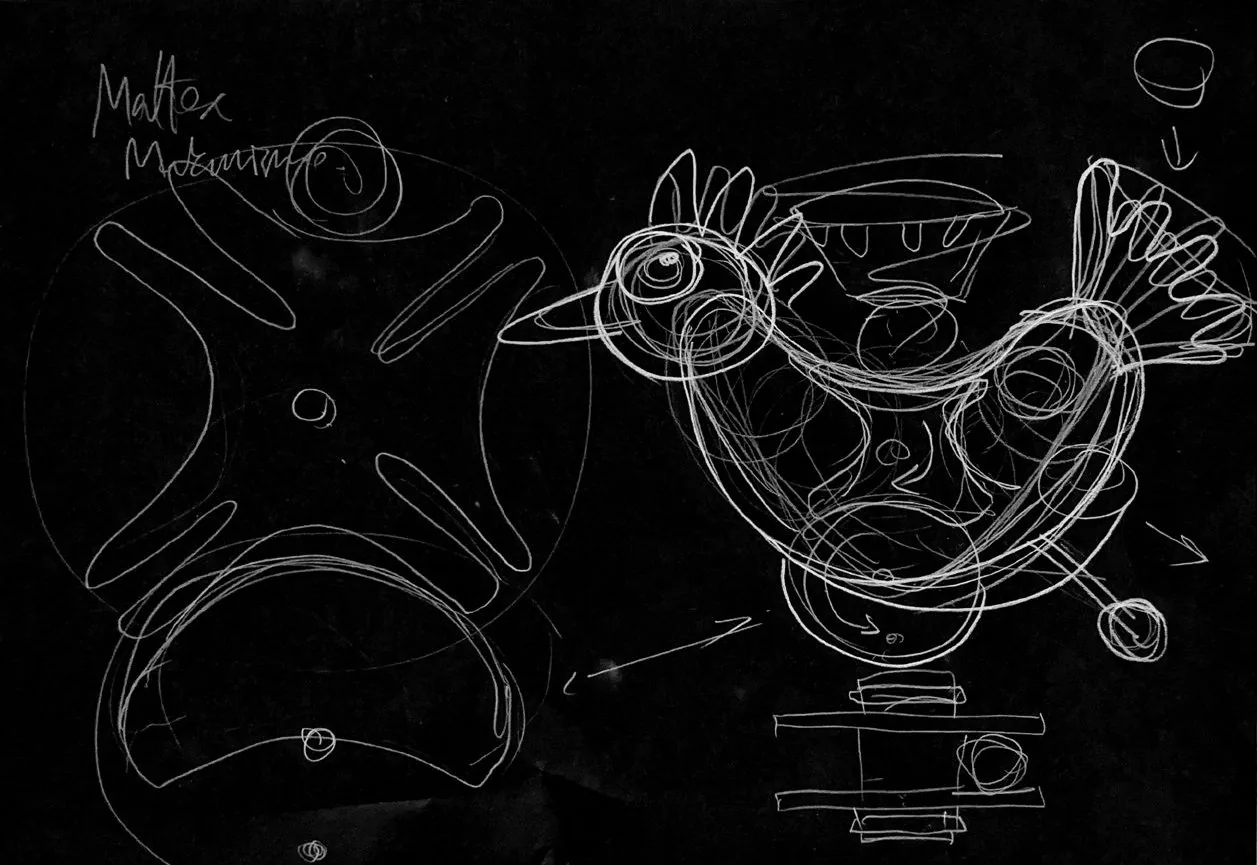
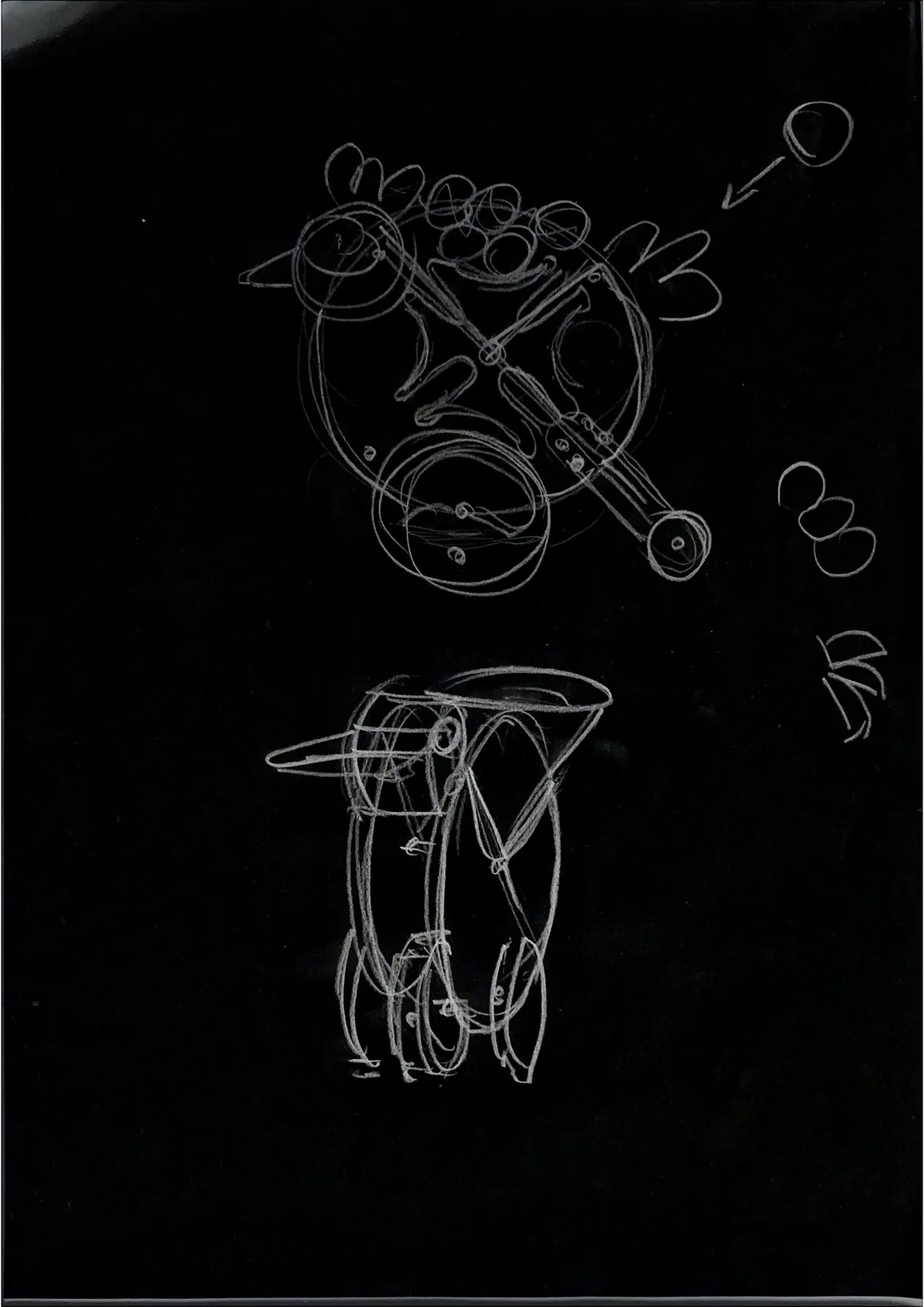
24 hours. One question: does the idea survive the floor?
The finished design is clear plexiglass shells around metal parts, so a child can watch everything move. For the first prototype I chose speed over finish: wooden internals, one plexi half, one cardboard half. Enough to pull it across a floor and see what happens.
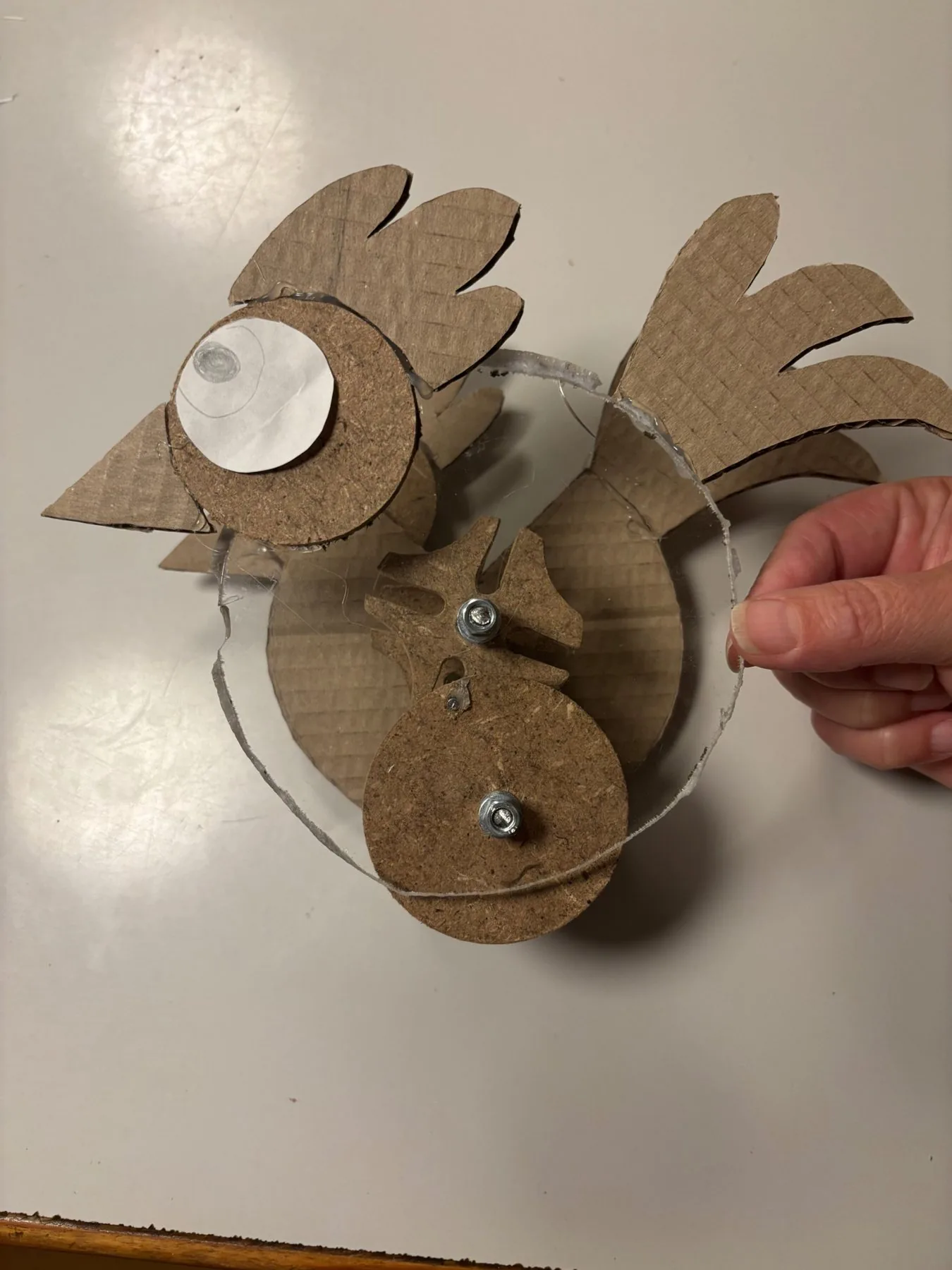
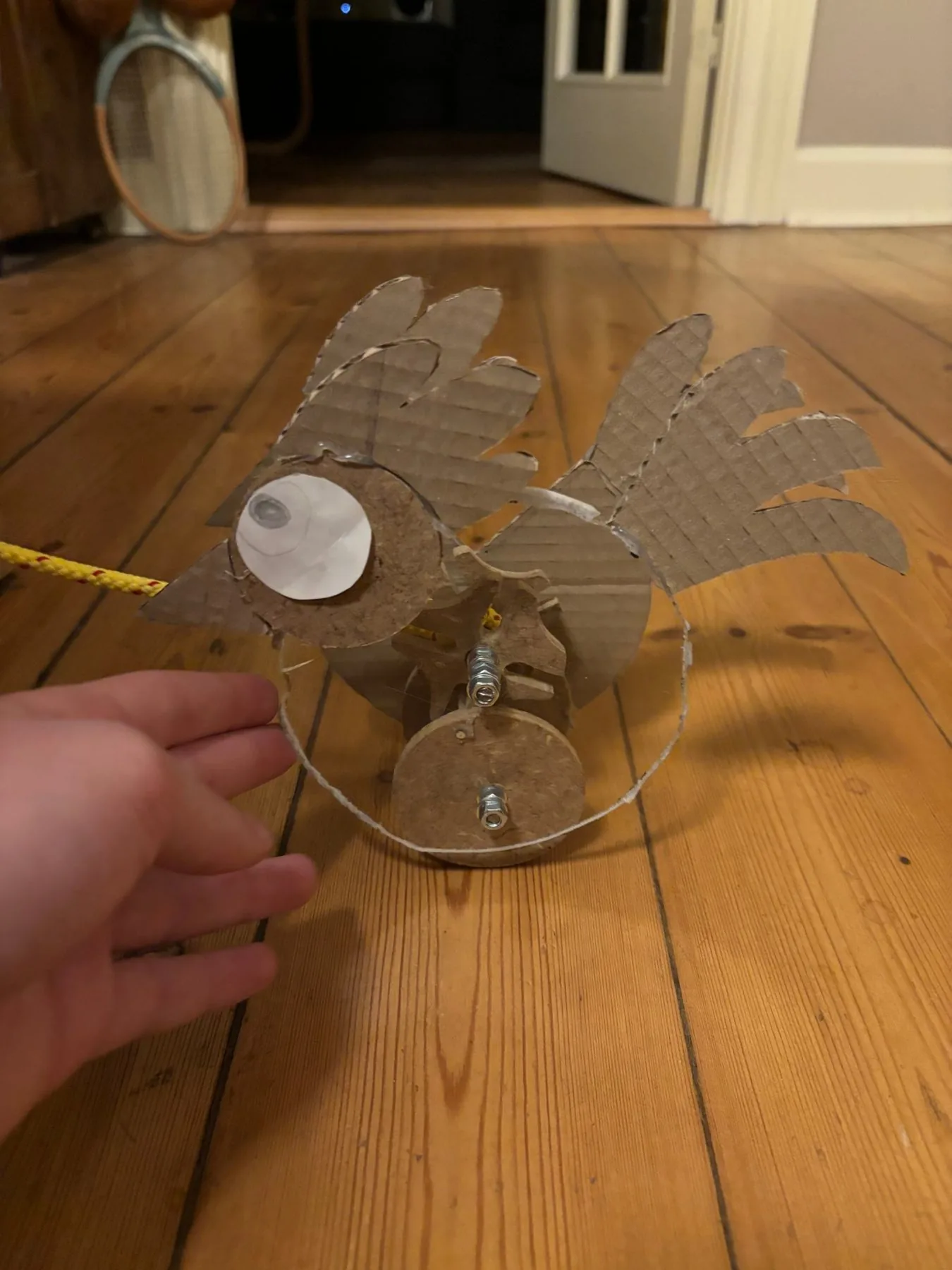
The egg dropped. Just not every time.
The wheels slid on the wooden floor, so the drive skipped steps. A Geneva drive only steps if the wheel really turns. Grip is part of the mechanism.
It couldn’t stand on its own. One axle is a line, not a base. It tipped as soon as I let go of the rope.
Every part is a flat profile. Cut from sheet, held by four rods.
That keeps production simple, and an older child can build it themselves — which teaches more than the toy does.